
Semiconductors are the Invisible Essence Driving the Artificial Intelligence Revolution
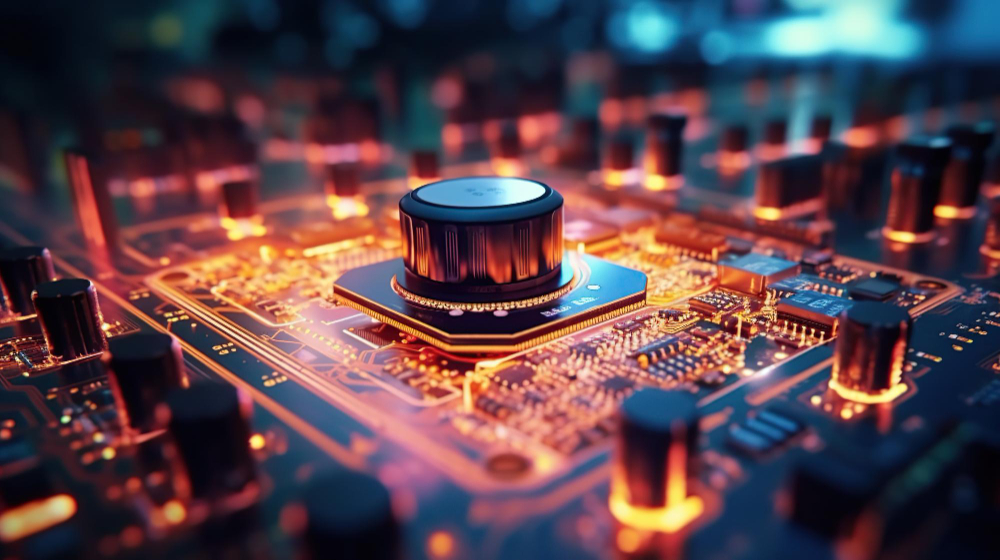
At the heart of the technological revolution we are witnessing, semiconductors emerge as the unseen heroes, unleashing significant advances in artificial intelligence (AI). These tiny electronic components, crucial to the operation of modern devices, have paved the way for the rise of AI, transforming the way we interact with technology and the world around us.
The Invisible Foundation of the Revolution
Semiconductors are materials with electrical properties intermediate between conductors and insulators. This technical term may seem abstract, but its impact on computing and artificial intelligence is monumental. Transistors, built from semiconductors, form the backbone of electronic circuits and are the basis for the speed and efficiency of modern computing.
The Advent of the Information Age
The rapid development of semiconductors has led to the miniaturization of integrated circuits, enabling exponential increases in processing power. This breakthrough, known as Moore’s Law, has driven the information revolution by providing faster, smaller and more powerful devices. Without semiconductors, the explosion of data and rapid information processing that characterizes our current era would simply be unimaginable.
Semiconductors and Artificial Intelligence
The relationship between semiconductors and artificial intelligence is symbiotic. Chips designed specifically for machine learning and neural network tasks have enabled significant advances in AI. The parallel processing capability and energy efficiency of semiconductors are critical to the efficient training and execution of AI algorithms, from speech recognition to complex data analysis.
Challenges and Opportunities
As we move into the future, the challenges in semiconductor miniaturization become more apparent. Physical laws impose limits on downsizing, raising questions about the sustainability of exponential growth in processing power. Research into new materials and innovative approaches are essential to overcome these challenges and continue to drive the artificial intelligence revolution.
Ethics in Artificial Intelligence
As we harness the power of semiconductors to advance artificial intelligence, we must also address the associated ethical issues. Automated decision making, privacy and security are crucial considerations that must be carefully balanced to ensure responsible use of the technology.
Conclusions
Semiconductors are the driving force behind artificial intelligence, transforming not only technology, but also the way we live and work. As we continue to explore the limits of processing power, it is imperative to consider the ethical and social implications of artificial intelligence, remembering that technology is a powerful tool that should be used for the well-being of humanity.
The Enigma of the 1.8 Million Year Natural Fission Nuclear Reactor and its Impact on Life Today